Journal / The tableNo. 23
Olive oil, fish, and a long table
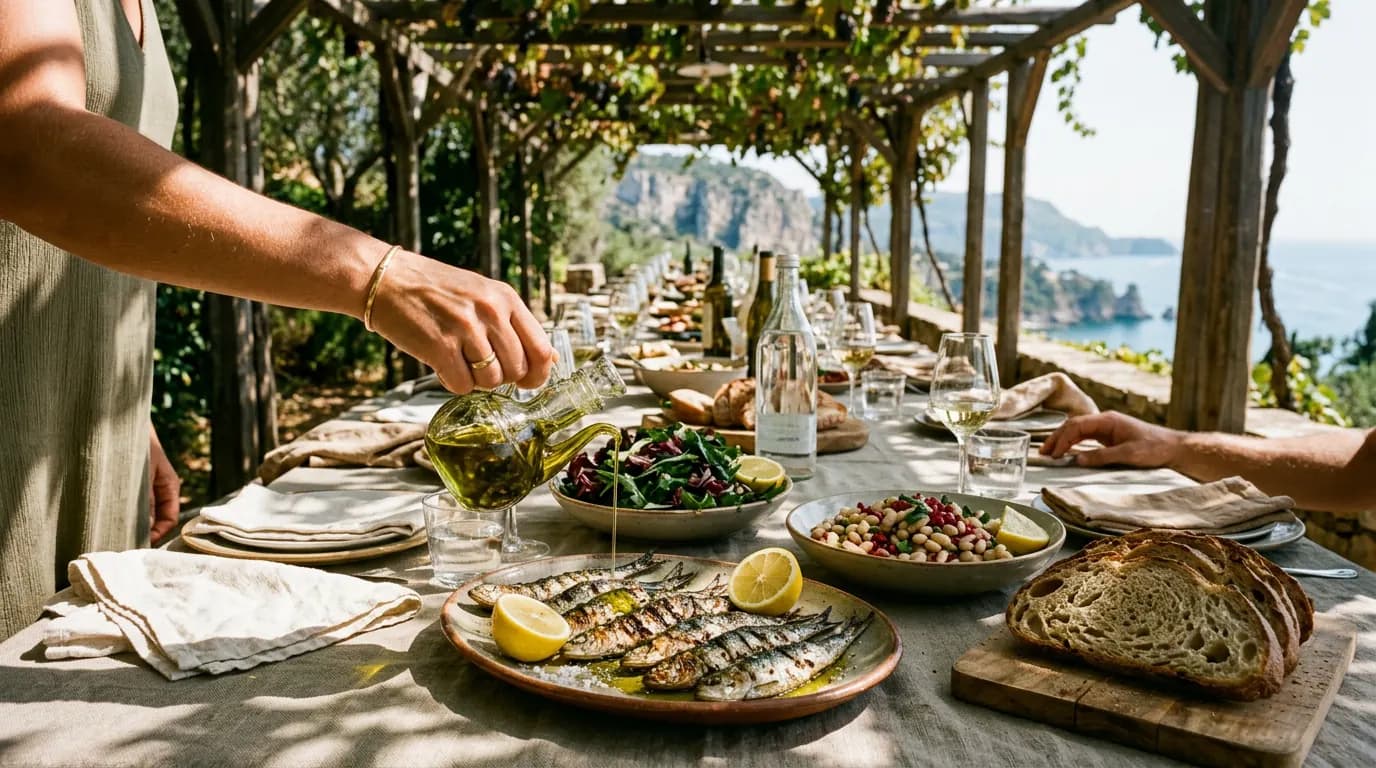
Olive oil, fish and a long table: how a menu on the Côte d'Azur is put together.
In 2013, scientists described nine "hallmarks of aging" in the journal Cell. A 2023 update expanded the list to twelve. The list covers DNA damage, shortening telomeres, changes in how genes switch on and off, declining protein quality control, tired mitochondria, accumulating senescent cells, depleted stem cells, chronic inflammation and disrupted nutrient sensing.
Diet is one of several factors those papers discuss. It is not a fix for any of them. At the table it is a set of choices: what is on the plate, and how it is cooked.
How this shows up in my cooking
Colour from plants
Broccoli sprouts, berries, leafy greens and good olive oil. A Mediterranean pattern built on these foods is how the Riviera has long eaten, and it is how I write a menu.
Fish, olive oil, fewer ultra-processed foods
My menus lean on:
- Fatty fish: sardines, mackerel, wild salmon
- Extra virgin olive oil
- Turmeric with black pepper
- Dark leafy greens
- Berries and pomegranate
What the Blue Zones teach a cook
Dan Buettner's writing on the Blue Zones describes a few shared habits around the table. I use them as a way to think about a plate, not as a promise:
- 1Mostly plantsVegetables, grains and fruit make up most of the plate.
- 2Beans oftenLegumes show up nearly every day.
- 3Moderate proteinMeat is a side, not the centre.
- 4Shared mealsIn several of those places, a small glass of wine with food and friends is part of the day. That is a habit they describe, not a drink I am recommending.
- 5Stopping before fullOkinawans call it hara hachi bu: eat until you are about 80% full.
My approach
I cook with these ideas in mind without turning dinner into a prescription. A long lunch on a terrace should taste generous.
Book a private chef
Have this cooked in your kitchen.
Cook with me on the Côte d'Azur.